A Family of Artists, a Community of Creatives

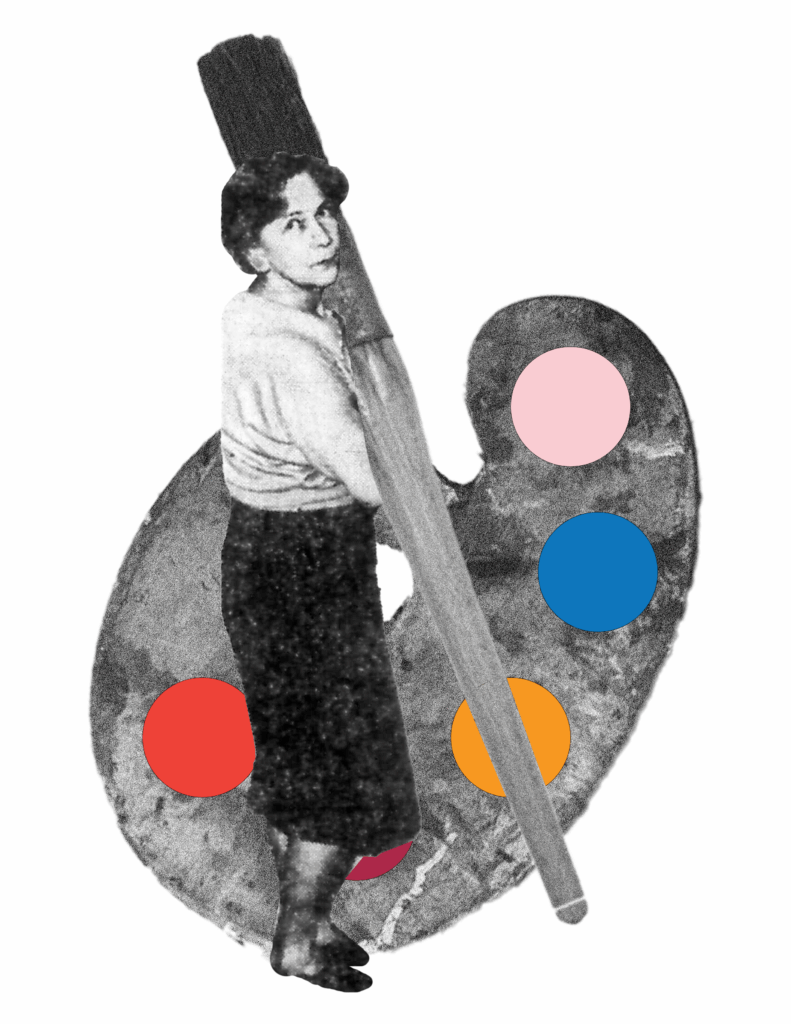
A black and white collage of Beatrice Hartig Zimmerman, overlayed with a paintbrush and a paint palette.
Artist Beatrice Hartig Zimmerman | collage by Lindsay Taylor

Raised in a house full of art and creativity, Beatrice Hartig Zimmerman was no stranger to seeing the beauty in everyday life. Her father, artist Arthur E. Hartig, instilled in her and her sister Genevieve an appreciation for artistic expression and creative pursuits. The family’s creativity even extended into the culinary arts, with mother Emma being renowned for crafting delicious homemade noodles at the family home in Osceola. At the age of 16, Beatrice went on to study painting in Chicago and brought back to St. Joe County skills which won juried awards in the Midland Academy of Art exhibitions and placed her among her peers in the region.

Beatrice created well over 1,000 paintings in her life, and took her love of art not just to paper and canvas but to unorthodox locations as part of an effort to introduce more art to public spaces. In 1936, she participated as a chairwoman for “arranging displays in schools, libraries, clubs, and merchants’ windows,” eventually painting for the Menaugh’s Hardware storefront in Osceola. Her paintings were described as “outstanding in color and beauty,” a blend of charm and technical skill.

 She was a librarian, an accomplished musician, and a prolific artist who, along with her family members, was invested in beautifying the region through her works and engagement with the community. The Hartigs were involved in and charter members of many artist societies ranging from the St. Joe Valley Chapter of the American Artists Professional League, Midland Academy of Art, the St. Joe Valley Watercolor Society, and the Northern Indiana Artists Association, where Beatrice’s legacy lives on through the Beatrice Hartig Zimmerman Memorial Award. 

Beatrice and the Hartigs demonstrated how utilizing your skills and passions creates a more beautiful environment and a more fulfilling life. And more than that, they showed how gathering with like-minded individuals to foster a positive atmosphere goes a long way toward making where you live a better place to be.
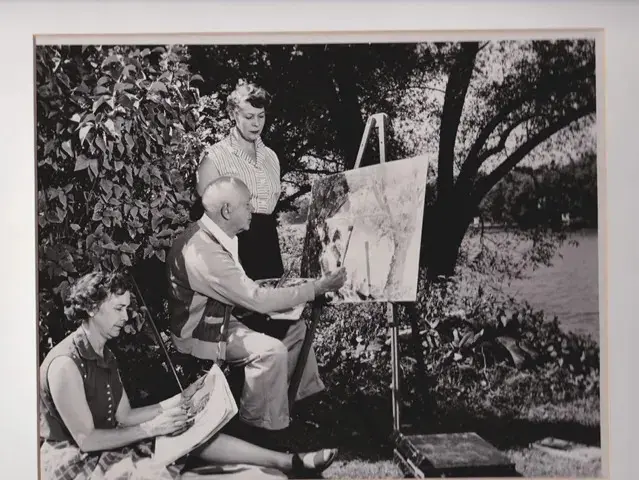
Black and white photo from the south bend tribune which features the Hartig-Zimmerman family who were professional painters.
This South Bend Tribune photo shows local artists Beatrice Hartig-Zimmerman, on the ground, A.E. (Arthur) Hartig and Genevieve (Geni) Hartig-Toth in the 1940s. The two women were Hartig’s daughters, and all three of them were professional artists. | Photo from the South Bend Tribune
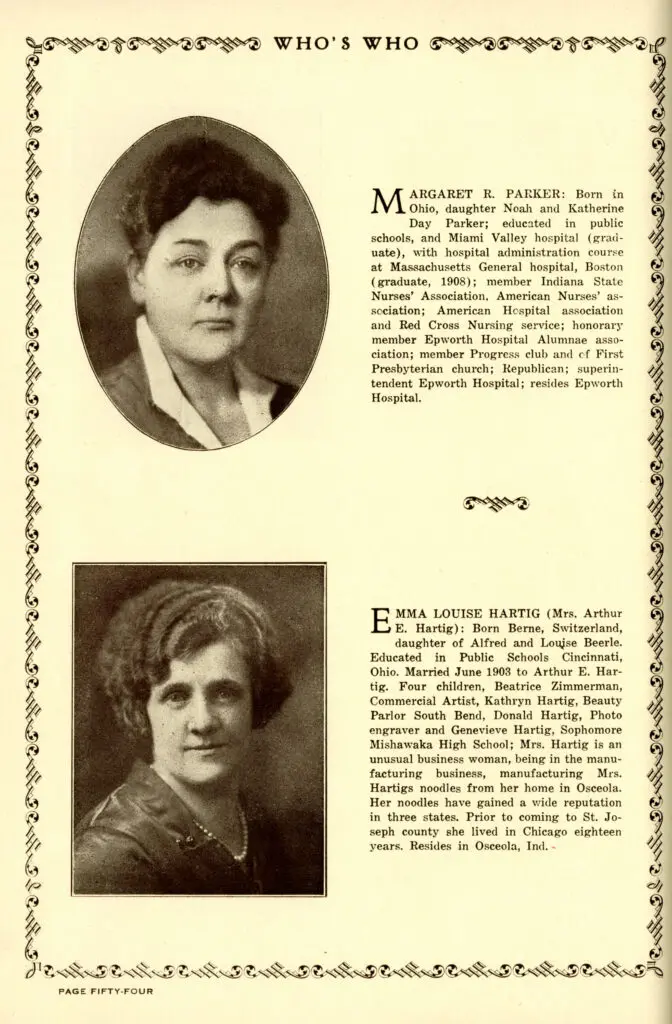
An image from a 1928 publication showcasing local and influential females.
Beatrice’s mother Emma Louise Hartig, pictured here from the publication Who’s Who in Woman’s Realm: South Bend – Mishawaka. She was an accomplished culinary artist and businesswoman. | 1928

Wanna Get Creative?

With your library card you can access thousands of instructional videos on a wide variety of artistic mediums through CreativeBug.

Reading List

Fine Arts of the South Bend Region, 1840-2000

The Artistic Heritage of South Bend: 1930 – 1970 (in-library use only)

Hoosier Painters of the 21st Century


References

Anderson, E. (1931, Nov. 15). Hartig family will show art work in Osceola: Father and daughters display paintings Friday night. South Bend News Times. South Bend, Indiana.

Collins, W.R. (2014). Fine arts of the South Bend region, 1840 – 2000. Wolfson Press, Indiana University South Bend.

Cotter, D. (1962, March 8). Osceola librarian is capable artist and musician; loves both hobbies. The South Bend Tribune. South Bend, Indiana. 

Oberhausen, J. & Zimmerman, B.H. (1987). The artistic heritage of South Bend 1930 – 1970. South Bend Art Center. 

Stimulation of interest in exhibits and promotion of local crafts program aim. (1936, Nov. 6). The Indianapolis Star, p. 25.

(2020, Dec. 31). Jean Warner Magrane. The South Bend Tribune, C2.
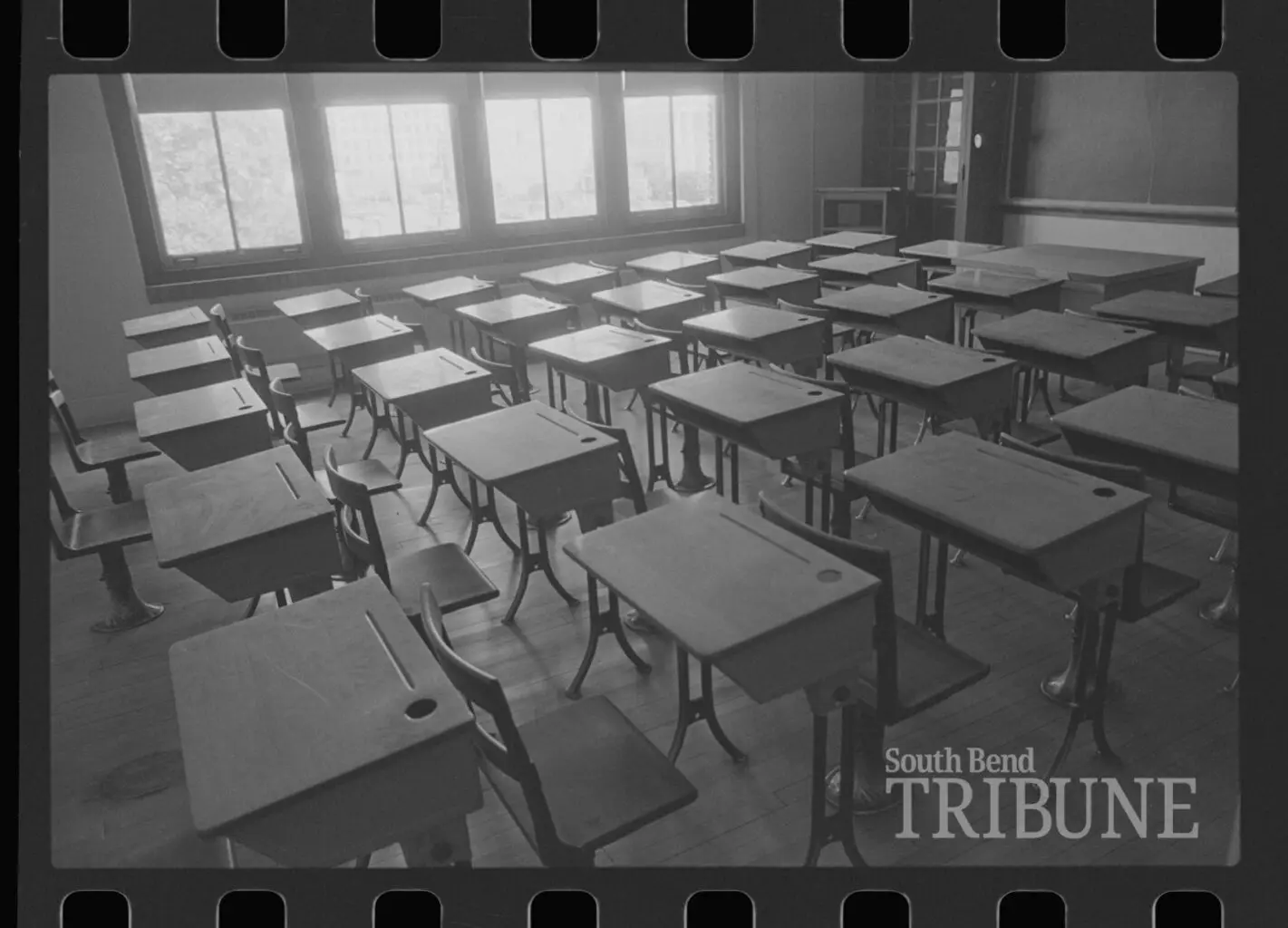
What Happens When School Buildings Graduate?

When the final bell rings, some schools don’t close; they transform.

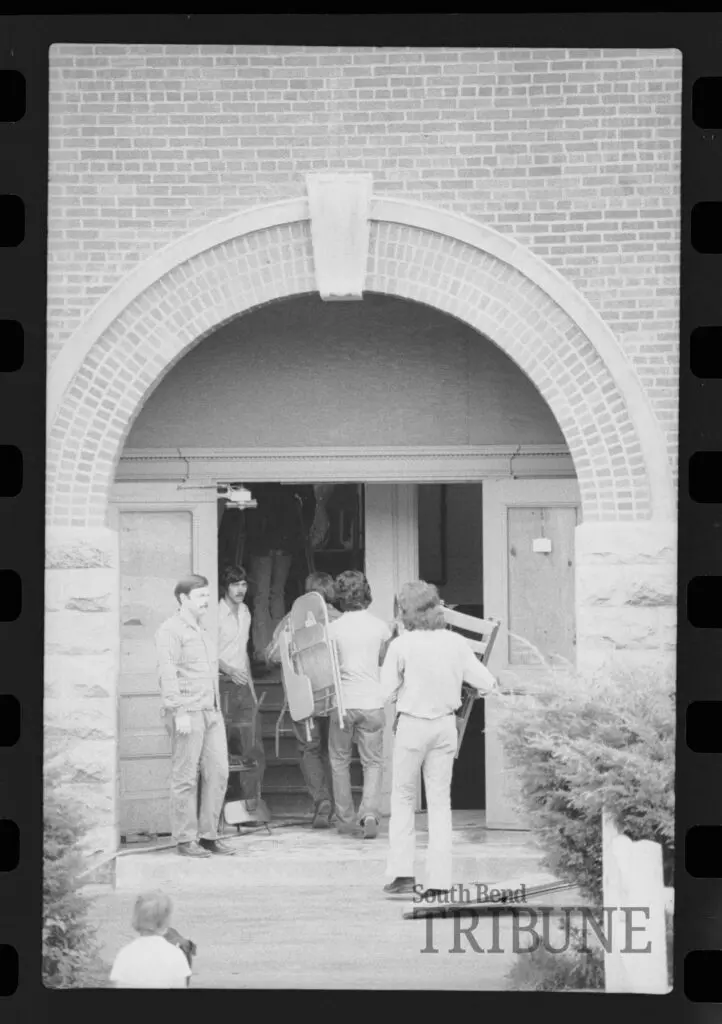
Larry Giantomas wiped away tears as he walked through Central High. It was spring of 1995, 25 years after the school’s final graduating Class of 1970 received their diplomas, and emotions were high as he and others toured through their old building. The dedication ceremony for the Central High Apartments marked a new chapter for the school’s long and storied history. A graduate of 1951, Larry wore his faded blue and orange graduation tassel pinned to his jacket as he relived teenage memories.

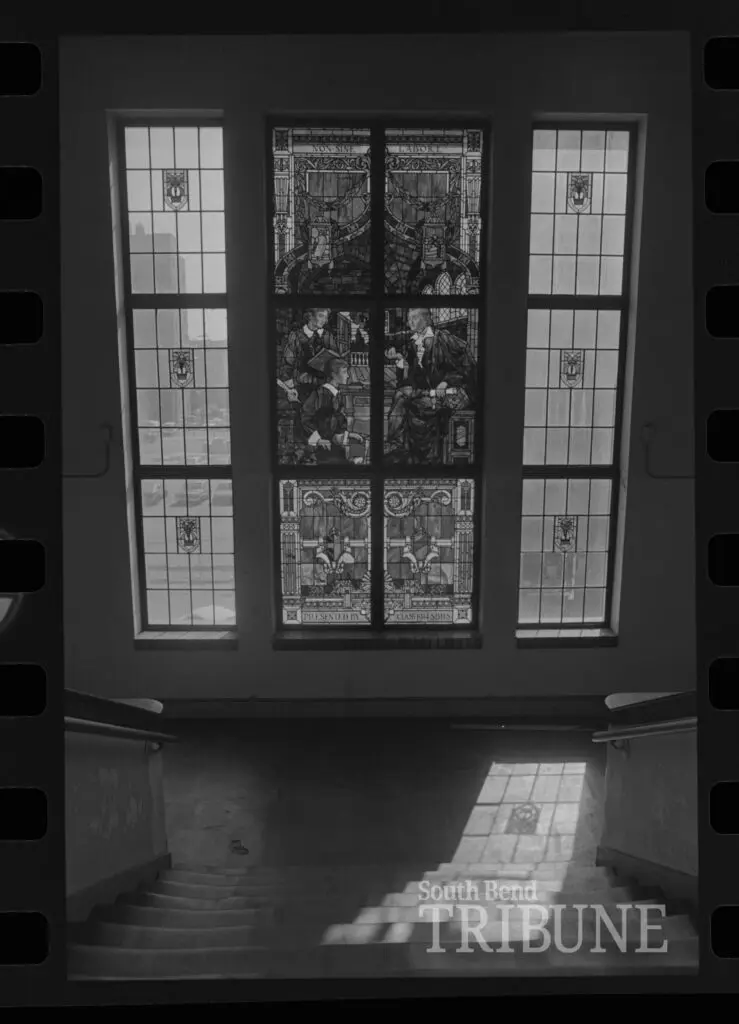
Walking past the grand stained glass window, climbing the worn marble steps, entering into his homeroom, he heard echoes of friends and times gone by. Former Central students like Larry came to pay their respects to the school, and to see a preview of the 106 new apartment units completed that year. Basketball courts, classrooms, and even the pool had been transformed into unique living spaces to give the historic educational building a new purpose.

Hosting its first class of students in 1874, Central was rebuilt, remodeled, expanded and repurposed many times before it finally graduated to apartments in 1995. Like many historic buildings in South Bend, evolution becomes necessary to fit with modern needs. The city has an almost hermit crab-like ability to see not just an old shell but new possibilities. The Colfax School, constructed in 1898, is another example of this kind of transformation. After the last school bell rang out in 1976, the building sat empty for only a year before it was turned into the Michiana College of Commerce in 1977, followed by a conversion to the Colfax Cultural Center in the 1980s, which remains in operation today.

Even as time marches on, we can coexist with the memories of the past by listening for the impressions of laughter, learning, and lives being lived in the school halls of history. “Old buildings show you who you are as a community,” said Judy O’Bannon in a 1996 Tribune interview about the Central High project, “They are our meeting and gathering places. Each community needs one.” And in these old school buildings, there are still lessons being learned and lessons being taught…how to play a new board game with friends, how to appreciate local art in a gallery, how to cook a new meal, how to live in a city that is constantly reinventing itself.


More Local & Family History Resources

Schools and libraries of the past used card catalogs to locate books in the collection. Did you know we still have some of the library’s original card catalogs? They no longer point to books in our collection, but to our clipping files. These files are folders of newspaper clippings collected by librarians over decades on a variety of local people, places, events, and buildings. Come to the Local & Family History department on the third floor of the Main Library and a staff member will be happy to pull some clipping files for you to look at, whether it’s for research or just for fun!

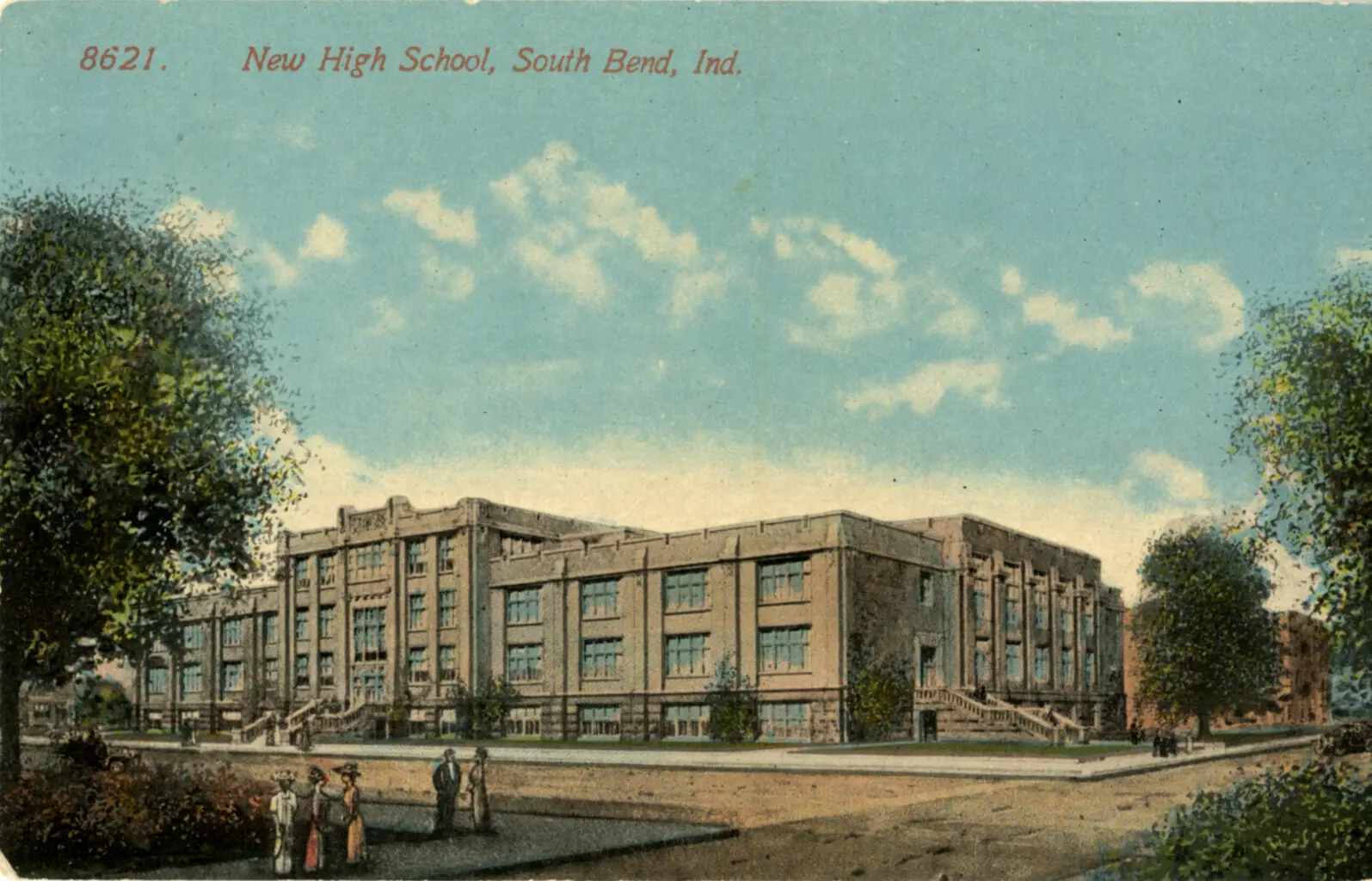
Illustrated vintage postcard showing "New High School" in South Bend, Indiana. The large brick school building features tall windows and prominent staircases on both sides of the entrance. People in early 20th-century clothing are gathered on the sidewalk in front, with trees and blue skies completing the scene.

See Our Full Selection of Historic School Photos

Reading List

South Bend Central High School Remembered

City of South Bend Historic Sites and Structures


References

Borlik, K. (1995, Feb. 1). A class act: Apartment project breathes new life into Central High School, retaining its character and charm. The South Bend Tribune.

Giantomas, L. (1995, May 5). Ceremonies at Central High turn back the hands of time | Michiana point of view. The South Bend Tribune.

Porter, D. (1996, June 7). Central project praised for ingenuity. The South Bend Tribune.

French History in South Bend

From River Path to City Streets: Early French Presence in St. Joseph County

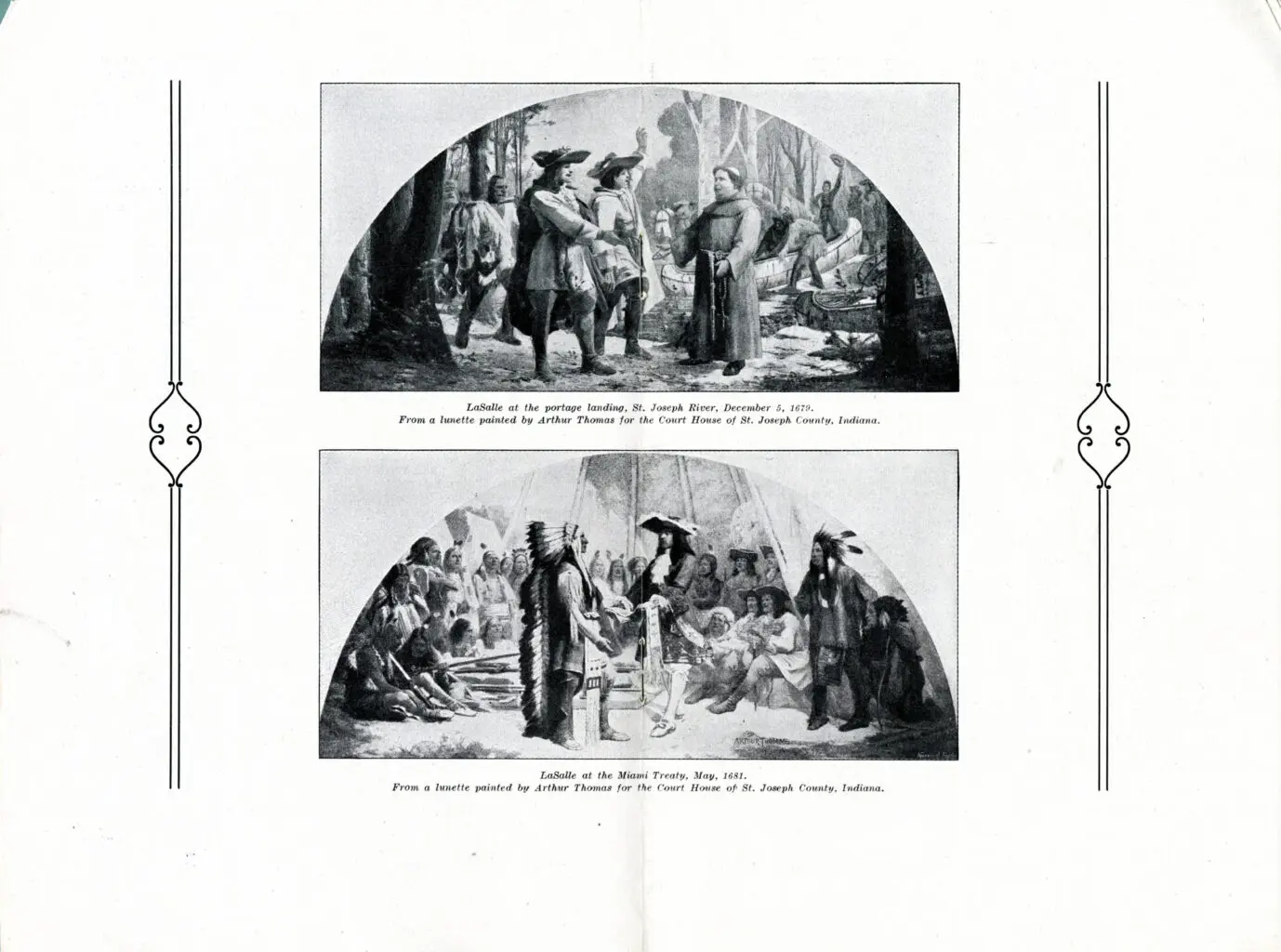
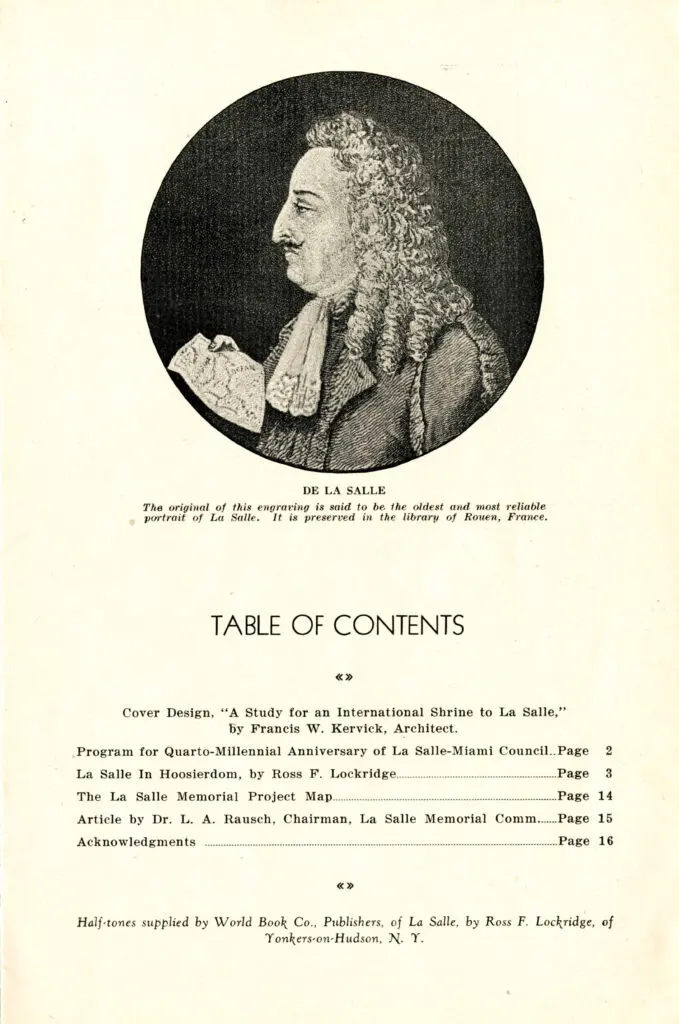
Long before South Bend took shape as a city, the land along the St. Joseph River was home to the Potawatomi and Miami peoples, who were stewards of the water, woods, and wildlife, and who utilized the vast St. Joseph River for trade and cultural connection. As America became a destination for new conquests and possibilities, European nations staked their claim on North American lands. French Jesuit missionary Father James Marquette set foot on the banks of the river in 1675, and a few years later in 1679, French explorer René-Robert Cavelier Sieur de La Salle arrived and met with Potawatomi Chief Onangises. They created a fur trade partnership, opening the door for permanent European settlement.

French-descended colonists, drawn by the river’s reach and fertile land, began building a town, laying streets and foundations over a place that had long been lived in. Pierre F. Navarre built his cabin along the river for fur trading in 1820, and Alexis Coquillard came down from Detroit in 1823 to lay out the plans for a city. You can still see traces of this layered history and French influence today in street names, parks, and buildings, reflecting the duality of our small pocket of the midwest.

But as with any new claim to land from outsiders, those who existed before were driven out in the name of urban expansion. Following Andrew Jackson’s Indian Removal Act of 1830, nearly a thousand Potawatomi men, women and children were forcibly removed from Northern Indiana in 1838, where they were pushed to reservations in Kansas and Oklahoma on what is known as the Potawatomi Trail of Death.

To live in St. Joseph County is to see evidence of the past living alongside hopes for what’s ahead, and to be a mindful resident of this place is to honor the people who walked these trails long before they were paved over. In doing so, we create room for a more honest and inclusive future — one where we recognize that memory is not just something we keep, but something we build on with care.

References


History of St. Joseph County Indiana by Chas. Chapman & Co., Chicago 1880

Historic Background of South Bend and St. Joseph County in Northern Indiana compiled and published by Schuyler Colfax Chapter of the Daughters of the American Revolution, second edition

https://www.historymuseumsb.org/the-first-settlers

https://www.historymuseumsb.org/early-history-of-indiana-to-1779

https://infoweb.newsbank.com/apps/news/openurl?ctx_ver=z39.88-2004&rft_id=info%3Asid/infoweb.newsbank.com&svc_dat=NewsBank&req_dat=9B166313CC0E4EFF965591E570B9573B&rft_val_format=info%3Aofi/fmt%3Akev%3Amtx%3Actx&rft_dat=document_id%3Anews%252F15562D6574A76E60

https://www.sjcindiana.gov/1638/City-of-South-Bend

A Legacy of Pride

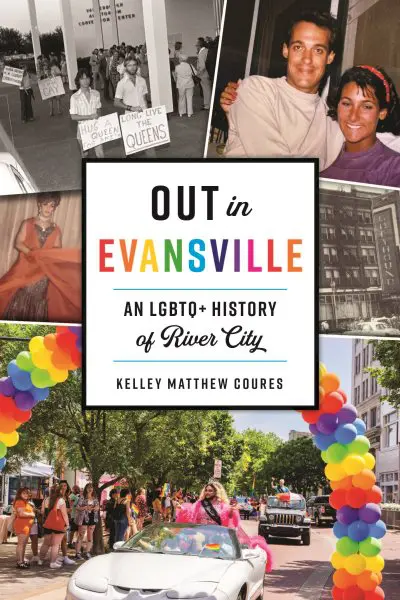
It was 1974; Gloria Frankel unlocked the doors to The Seahorse Cabaret on a humid South Bend night, not knowing if they’d still be open by morning. At that time same-sex dancing was illegal in Indiana, and a woman like Gloria — outspoken, defiant, and a “fierce protector of South Bend’s queer community” — wasn’t exactly welcome in polite society. But Gloria had seen enough by then. She’d lived through the hush-hush corners of mid-century Indiana and watched from afar as the Stonewall Riots shook New York. She wasn’t about to let South Bend stay in the shadows, so she carved out a place for people like her, people who needed somewhere to exist out loud. The Seahorse wasn’t just a bar — it was a lifeline.

Inside, the cabaret came alive with rhythm and performance. Drag queens, trans women, gay couples — all moved to the music and danced under the lights, sharing laughter and apprehension in equal parts. Police visits were frequent, and so were threats of firebombs and fines. But Gloria didn’t flinch. She paid the penalties, mended the walls, and opened again the next night. After a suspected arson attack on the cabaret in 1982, Gloria and her friends restored the Seahorse with help from the community in a matter of days, ensuring the space would be available for those who relied on it. That decade more residents relied on the Seahorse as an important fixture for HIV information and activist training. In the face of adversity, the Seahorse became a beacon of hope, a testament to the resilience and spirit of a community determined to be seen and heard.

Fast forward to today, and South Bend wears its colors a little brighter. Pride flags hang in windows, our city brings together thousands of people to celebrate Pride in the Park every June, and in 2015, Mayor Pete Buttigieg came out and wrote his truth in the pages of the South Bend Tribune. “For a local student struggling with her sexuality,” he wrote, “it might be helpful for an openly gay mayor to send the message that her community will always have a place for her.” The foundation Gloria laid all those years ago didn’t just hold, it grew. The struggles she endured made room for the celebrations we now enjoy. The Seahorse may be gone, but its echo lingers in every parade, every policy, every place that says: you’re welcome here.

Picture it: a room packed wall to wall, the sound of disco shaking the floor, and Gloria behind the bar, arms crossed, eyeing the door like she dared anyone to ruin her night. The music’s too loud, the crowd too free. In that room, what people thought on the outside didn’t matter. Inside the Seahorse, there was possibility, resistance, and a joy so bright it made your eyes sting. “I could be me,” says DeAnn Gatto in an oral history interview for the Civil Rights Heritage Center. You didn’t just dance there — you found your community.

And still, we press forward. Gloria’s gone now, but her story lives on in the lives she touched, in the activists she mentored, and in the truths she refused to bury. As we look to the future, the legacy of the Seahorse continues to inspire new generations to stand up, speak out, and build communities where everyone is free to be their authentic selves. There’s work yet to be done — but thanks to Gloria Frankel and other early LGBTQ activists of South Bend, we know it can be done. And we know it starts, always, with someone brave enough to open the door.

Dive Deeper Into Local LGBTQ History

Books to Check Out


Buttigieg, P. (2015, June 16). Why coming out matters. The South Bend Tribunehttps://www.southbendtribune.com/story/news/local/2015/06/16/south-bend-mayor-why-coming-out-matters/45761773/

Civil Rights Heritage Center. Queer SB in the 1970s. South Bend, IN. Indiana University South Bend. https://iusbarchives.omeka.net/exhibits/show/queer-sb-in-the-1970s/community


Poletika, N. (2017, June 29). Gloria Frankel & The Seahorse: The South Bend LGBT Club’s Fight for Gay Rights. Indiana Historical Society: Untold Indiana. https://blog.history.in.gov/tag/gloria-frankel/

A Look Back At The South Bend Blue Sox

At Home on the Field

Written by Lindsay Taylor

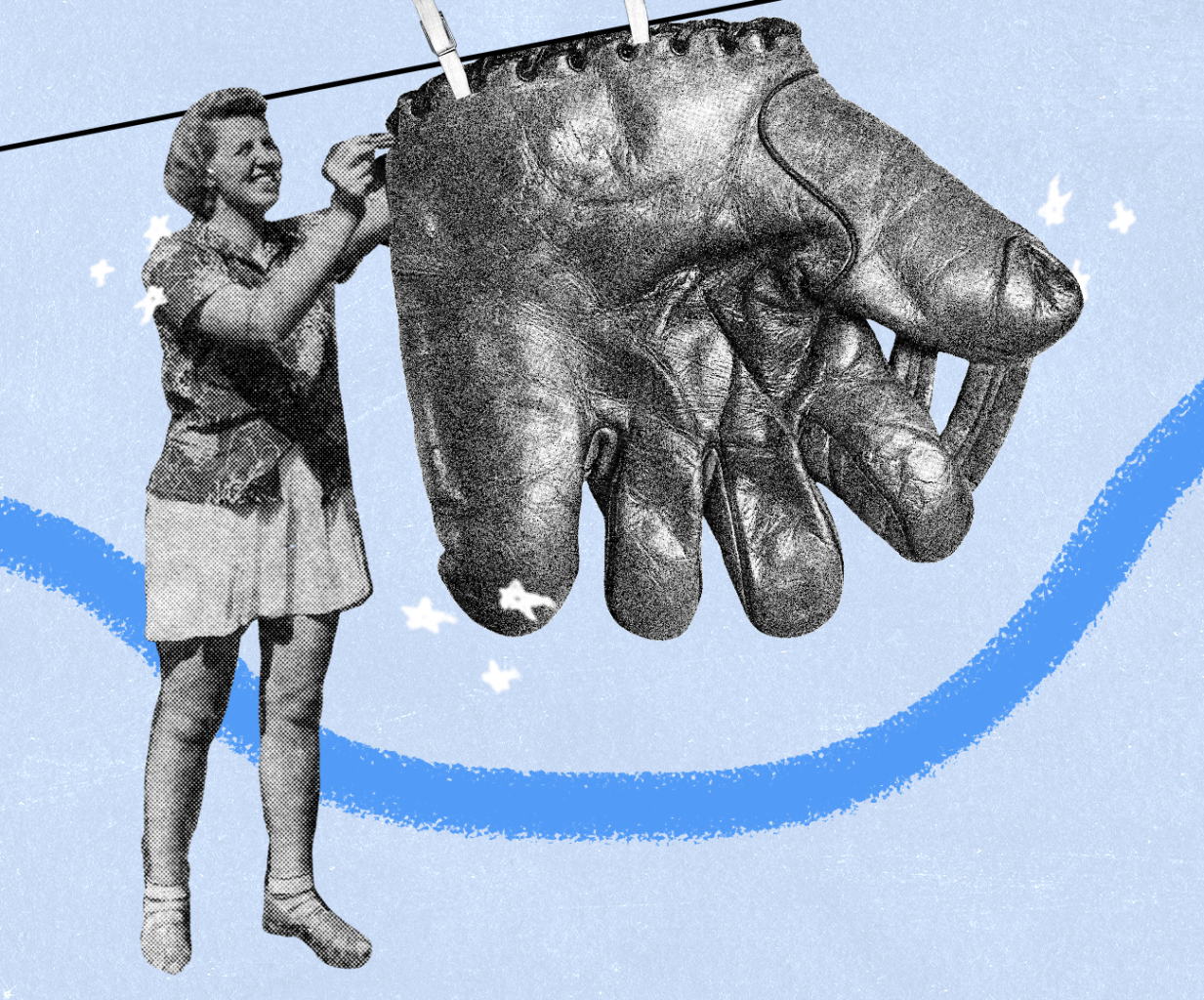
Mary Baker packed up a suitcase, ready to head south from her home of Saskatchewan to step onto the diamond in South Bend. If Maury got word, he would insist she stay in Canada to mind the house, just like the last opportunity she had to play ball. But Mary was good, and she knew it; she wasn’t about to let this chance pass her by.

With her husband Maury stationed overseas, a final nudge from her mother-in-law was all it took for Mary to make the journey to America and join the team. Maury could find out after. In 1943 Mary “Bonnie” Baker became a player for one of four regional professional women’s baseball teams in the All-American Girls Professional Baseball League and made her new home in South Bend.

Bonnie and the other South Bend Blue Sox players lived with host families around town, and played ball at Playland Park southeast of the city. Despite Bonnie and many players’ newfound freedom from rural and domestic life to play the game they loved, local newspaper and media coverage of the players often focused on their activities off the field, emphasizing to their readers that in spite of their athleticism, these women were still perfectly poised, unflinchingly feminine, all-American girls.

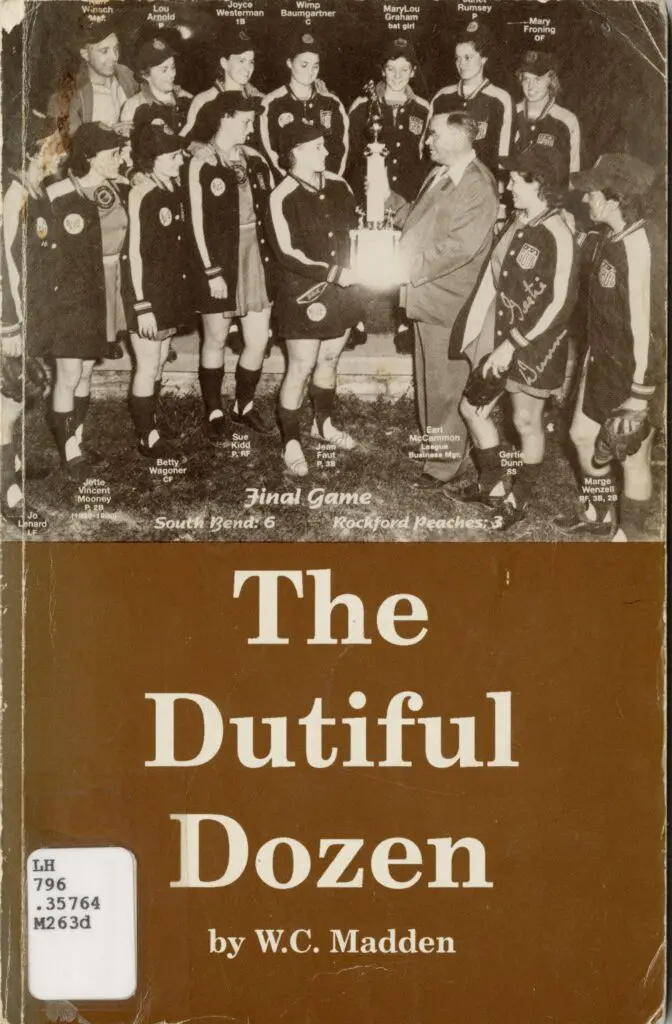
“Press releases centered on domesticity at every turn,” writes Lois Browne in Girls of Summer, “The pity is that Wrigley and Co. didn’t highlight the players’ real achievements…The League preferred to feature more ‘womanly’ activities — housework or piano playing, pasting pictures into scrapbooks and writing letters home.”

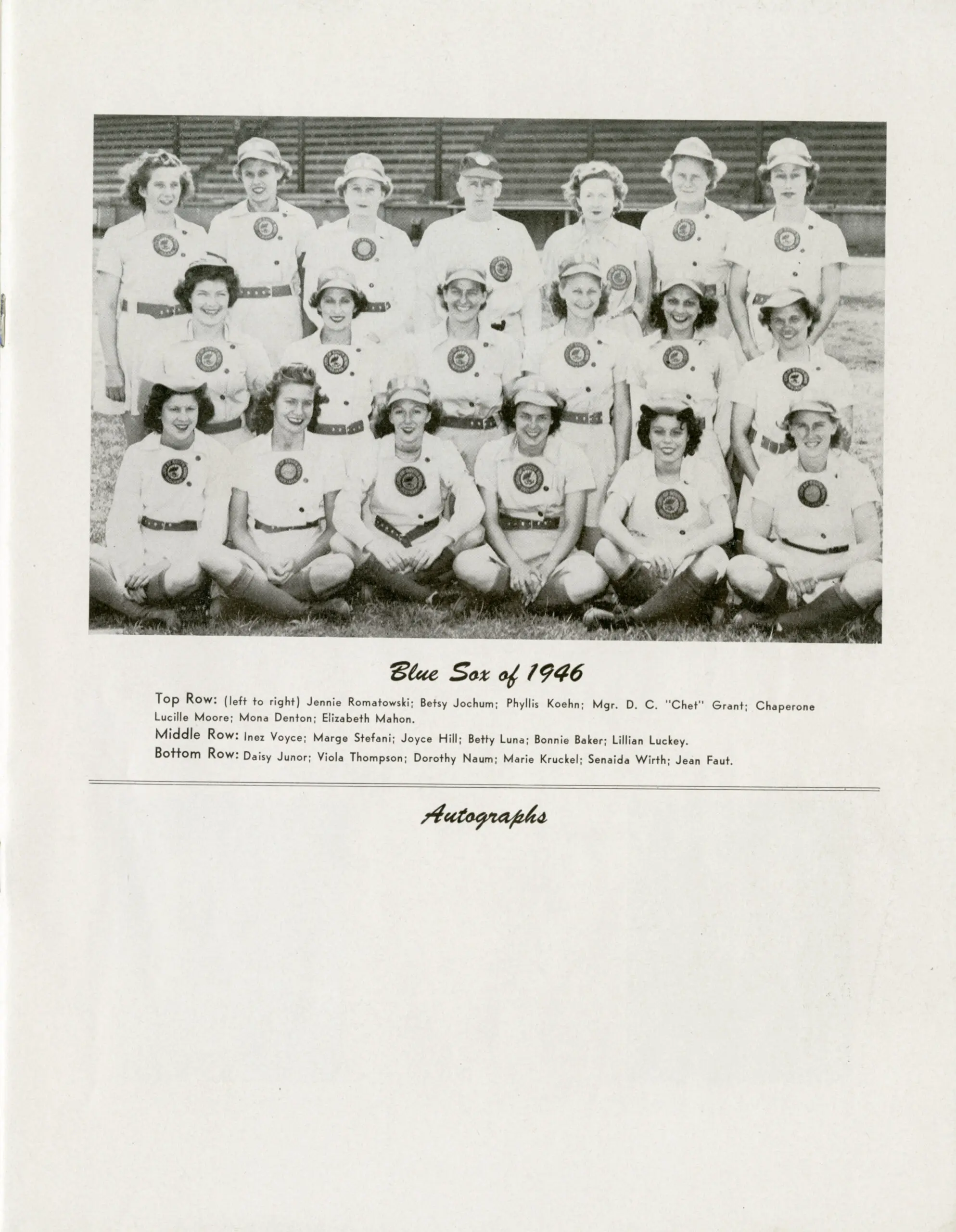
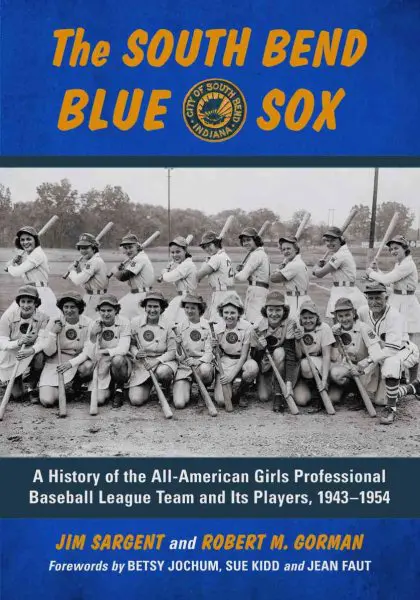
Even with the lopsided portrayals to help sell the League to American audiences, the ball players were still fearsome athletes who continued to set personal records and mark new heights of achievement for the sport. Former player Betsy Jochum — who still resides in South Bend and just turned 104 in February — reflected on the players’ achievements in her introduction for Jim Sargent & Robert Gorman’s 2012 book The South Bend Blue Sox.


“You might say that we were pioneers in our field of dreams. I hope we helped make a change in women’s sports opportunities. Back in the 1940s, there weren’t too many avenues for women. We were among the few fortunate ones.”

Betsy Jochum, Former South Bend Blue Sox Player

Because of players like Bonnie for the Blue Sox, or Betty Chapman – the first Black woman to play in the rival National Girls Baseball League – who decided to take a chance and step onto the field, we continue to see enthusiasm and growing support for women’s sports. We should likewise continue to acknowledge the expansive ability of women to be so many things at once…beautiful, strong, and dimensional.

Dive Deeper Into the Blue Sox

Want More Photos?

View the full collection on Michiana Memory


Books to Check Out

Traditions Old and New: Dyngus Day in St. Joe County

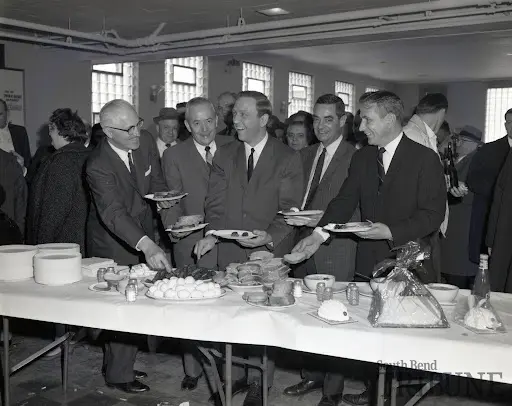
An open-air motorcade drove down Lincolnway as South Bend Tribune reporter Jack Colwell and Senator Bobby Kennedy made their way to the west side of South Bend, in April of 1968. When the car doors opened they emerged to crowds of people celebrating at Polish meeting houses with food and drink in hand, eager for a chance to shake hands with the senator.

“Kennedy talked to the crowd in English and Polish. He sang a Polish song. He waved a Polish flag. He ate kielbasa….Dyngus Day was in the national news as a result of Kennedy’s visit,” Colwell wrote in a 1998 retrospective. A unique Polish-American holiday with folklorish roots linked to the introduction of Christianity to Poland, Dyngus Day has evolved into the political event of the season featuring home cooked food, polka music, and campaign speeches ahead of May primary elections. And few places in America celebrate Dyngus Day quite like South Bend!

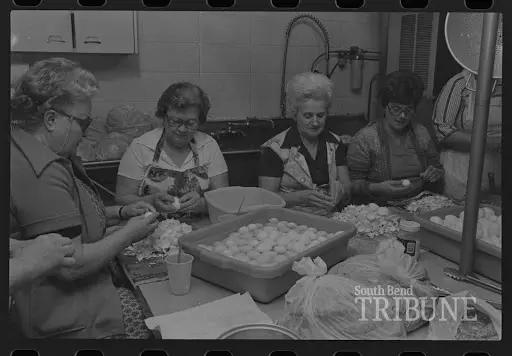
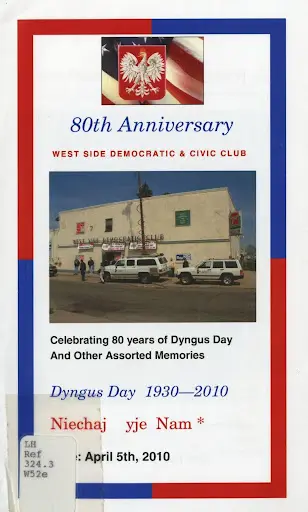
Dyngus Day celebrations have historically been held at Polish institutions, including the West Side Democratic & Civic Club and the M.R. And Z.B. Falcons buildings. There, volunteers and members spend long hours over the stove and in the kitchen preparing kielbasa, noodles, hard-boiled eggs, and delicious desserts to feed hungry crowds. The sound of polka music fills the halls, where dances and drinks are shared in between handshakes and speeches from politicians hoping to connect with the South Bend community. All across the area, residents and visitors alike enjoy Dyngus Day and Solidarity Day traditions, where efforts to strengthen local connection and efforts to make improvements are powered by political action.

Lucille Radecki and Frances McFadden are preparing food at the M. R. Falcon Club ahead of a Dyngus Day celebration at the Century Center. | 1978-03-27

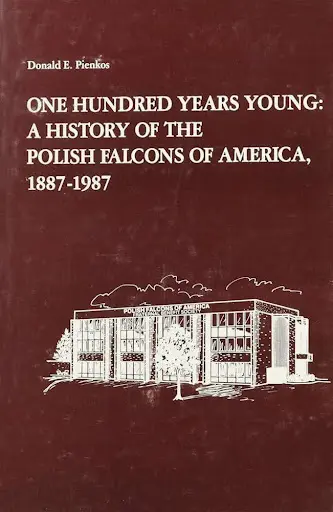
The Z.B. Falcons, a local chapter of the fraternal Polish organization founded in 1897, used their building at 323 S. Sheridan Ave. on the West Side right up until last year, with the bittersweet final Dyngus Day celebration occurring last April before the building’s closure at the end of May. But just as traditions in the old country found themselves evolving to fit a changing American society, new traditions will emerge as the Z.B. Falcons Nest 80 transforms into the new Western Branch of St. Joe County Public Library. So we say Smigus Dyngus, Happy Dyngus Day!

Take a Trip Down Memory Lane

Check Out Michiana Memory’s collection of South Bend Tribune photographs of Dyngus Day celebrations.

Dyngus Day Reads

References

Dits, J. (2025, Jan. 3). Z.B. Falcons building to become new Western Branch library. Makeover coming to LaSalle. South Bend Tribune. https://www.southbendtribune.com/story/news/local/2025/01/03/z-b-falcons-to-be-new-western-branch-library-in-south-bend/77429504007/

Kate, A. (2024, April 13). The history and traditions of Dyngus Day, 2024. ABC 57. https://www.abc57.com/news/the-history-and-traditions-of-dyngus-day-2024#:~:text=%E2%80%9CWhen%20it%20came%20to%20South,South%20Bend%20today%20was%20born.

Krabill, T. (2018, April 2). Michiana Stories: Kenny and Amy Bartkowiak. WVPE. https://www.wvpe.org/commentary/2018-04-02/michiana-stories-kenny-and-amy-bartkowiak

West Side Democratic & Civic Club. (2010, April 5). Celebrating 80 years of Dyngus Day and other assorted memories. 

WNDU 16 News Now. (2024, April 1). Politicians seek support at South Bend Dyngus Day events. https://www.youtube.com/watch?v=gxyHxcsR_28

WSBT-TV. (2024, April 2). Indiana club celebrates final Dyngus Day before permanent closure. https://www.youtube.com/watch?v=SG4QnJOmSZI

Want to be in the know with the latest library news?