A Family of Artists, a Community of Creatives

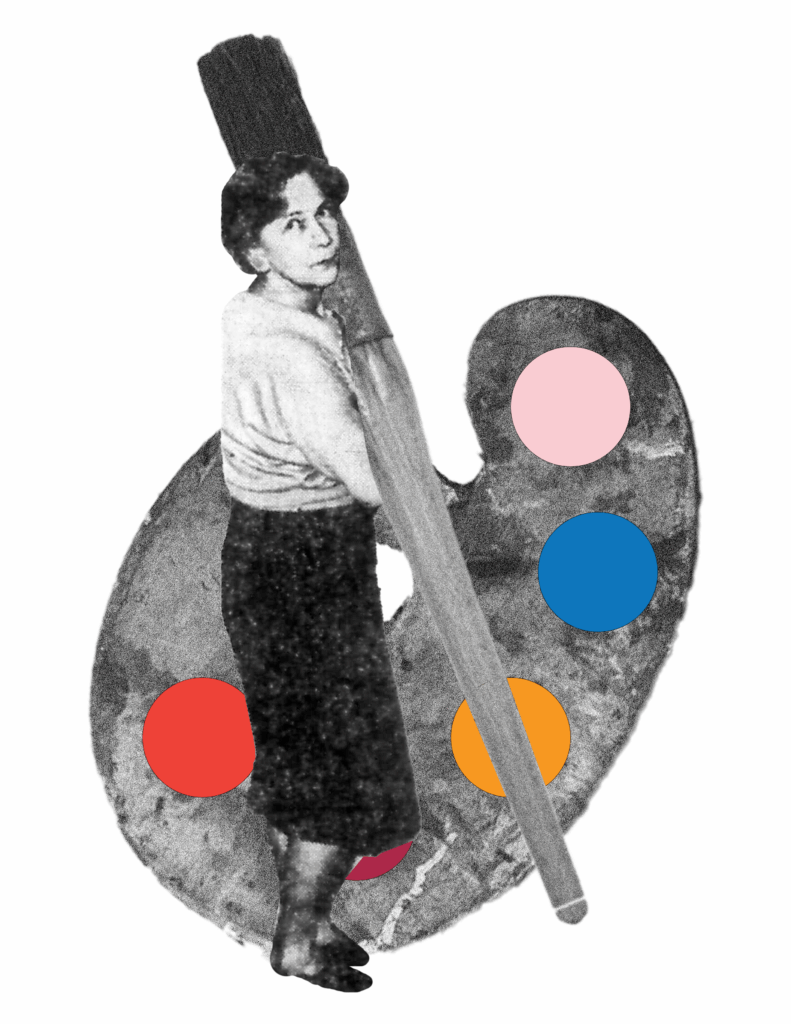
A black and white collage of Beatrice Hartig Zimmerman, overlayed with a paintbrush and a paint palette.
Artist Beatrice Hartig Zimmerman | collage by Lindsay Taylor

Raised in a house full of art and creativity, Beatrice Hartig Zimmerman was no stranger to seeing the beauty in everyday life. Her father, artist Arthur E. Hartig, instilled in her and her sister Genevieve an appreciation for artistic expression and creative pursuits. The family’s creativity even extended into the culinary arts, with mother Emma being renowned for crafting delicious homemade noodles at the family home in Osceola. At the age of 16, Beatrice went on to study painting in Chicago and brought back to St. Joe County skills which won juried awards in the Midland Academy of Art exhibitions and placed her among her peers in the region.

Beatrice created well over 1,000 paintings in her life, and took her love of art not just to paper and canvas but to unorthodox locations as part of an effort to introduce more art to public spaces. In 1936, she participated as a chairwoman for “arranging displays in schools, libraries, clubs, and merchants’ windows,” eventually painting for the Menaugh’s Hardware storefront in Osceola. Her paintings were described as “outstanding in color and beauty,” a blend of charm and technical skill.

 She was a librarian, an accomplished musician, and a prolific artist who, along with her family members, was invested in beautifying the region through her works and engagement with the community. The Hartigs were involved in and charter members of many artist societies ranging from the St. Joe Valley Chapter of the American Artists Professional League, Midland Academy of Art, the St. Joe Valley Watercolor Society, and the Northern Indiana Artists Association, where Beatrice’s legacy lives on through the Beatrice Hartig Zimmerman Memorial Award. 

Beatrice and the Hartigs demonstrated how utilizing your skills and passions creates a more beautiful environment and a more fulfilling life. And more than that, they showed how gathering with like-minded individuals to foster a positive atmosphere goes a long way toward making where you live a better place to be.
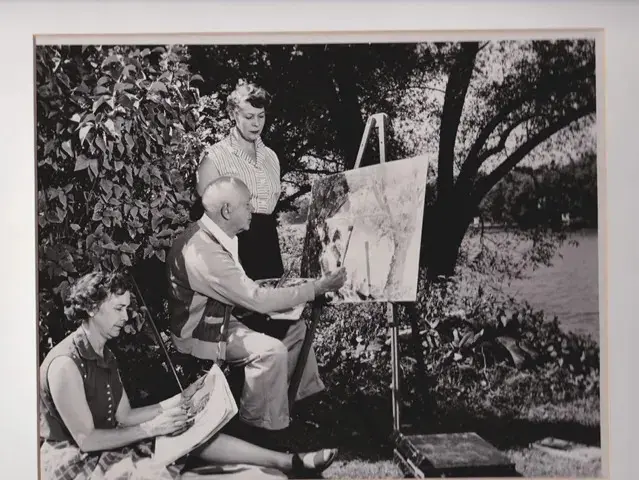
Black and white photo from the south bend tribune which features the Hartig-Zimmerman family who were professional painters.
This South Bend Tribune photo shows local artists Beatrice Hartig-Zimmerman, on the ground, A.E. (Arthur) Hartig and Genevieve (Geni) Hartig-Toth in the 1940s. The two women were Hartig’s daughters, and all three of them were professional artists. | Photo from the South Bend Tribune
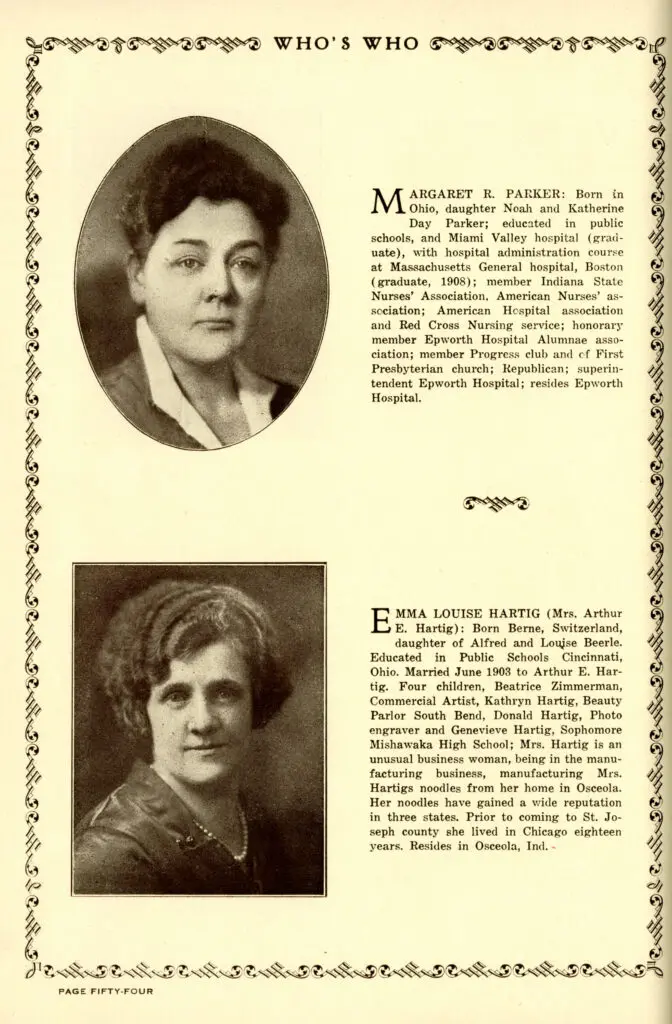
An image from a 1928 publication showcasing local and influential females.
Beatrice’s mother Emma Louise Hartig, pictured here from the publication Who’s Who in Woman’s Realm: South Bend – Mishawaka. She was an accomplished culinary artist and businesswoman. | 1928

Wanna Get Creative?

With your library card you can access thousands of instructional videos on a wide variety of artistic mediums through CreativeBug.

Reading List

Fine Arts of the South Bend Region, 1840-2000

The Artistic Heritage of South Bend: 1930 – 1970 (in-library use only)

Hoosier Painters of the 21st Century


References

Anderson, E. (1931, Nov. 15). Hartig family will show art work in Osceola: Father and daughters display paintings Friday night. South Bend News Times. South Bend, Indiana.

Collins, W.R. (2014). Fine arts of the South Bend region, 1840 – 2000. Wolfson Press, Indiana University South Bend.

Cotter, D. (1962, March 8). Osceola librarian is capable artist and musician; loves both hobbies. The South Bend Tribune. South Bend, Indiana. 

Oberhausen, J. & Zimmerman, B.H. (1987). The artistic heritage of South Bend 1930 – 1970. South Bend Art Center. 

Stimulation of interest in exhibits and promotion of local crafts program aim. (1936, Nov. 6). The Indianapolis Star, p. 25.

(2020, Dec. 31). Jean Warner Magrane. The South Bend Tribune, C2.
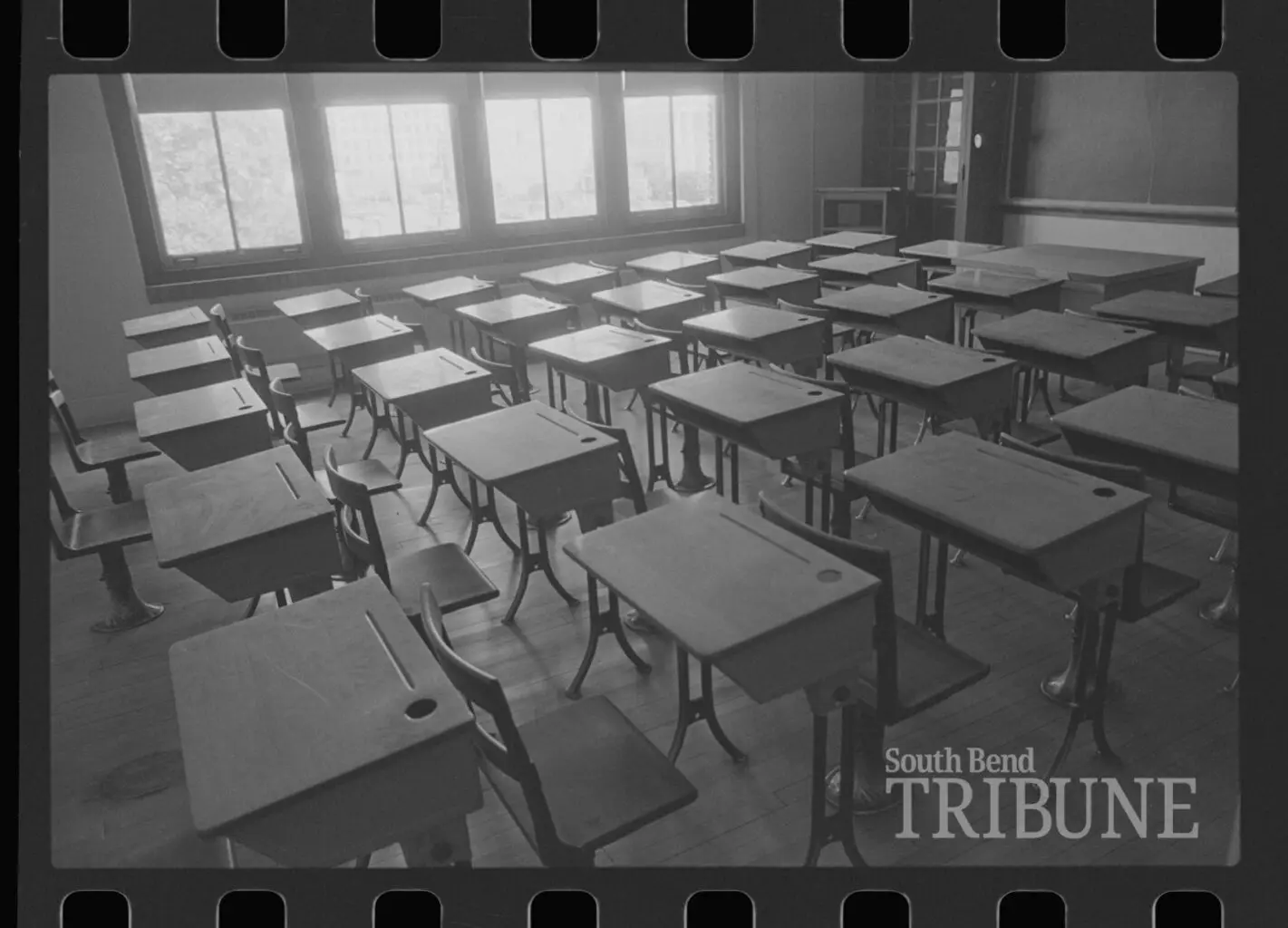
What Happens When School Buildings Graduate?

When the final bell rings, some schools don’t close; they transform.

Larry Giantomas wiped away tears as he walked through Central High. It was spring of 1995, 25 years after the school’s final graduating Class of 1970 received their diplomas, and emotions were high as he and others toured through their old building. The dedication ceremony for the Central High Apartments marked a new chapter for the school’s long and storied history. A graduate of 1951, Larry wore his faded blue and orange graduation tassel pinned to his jacket as he relived teenage memories.

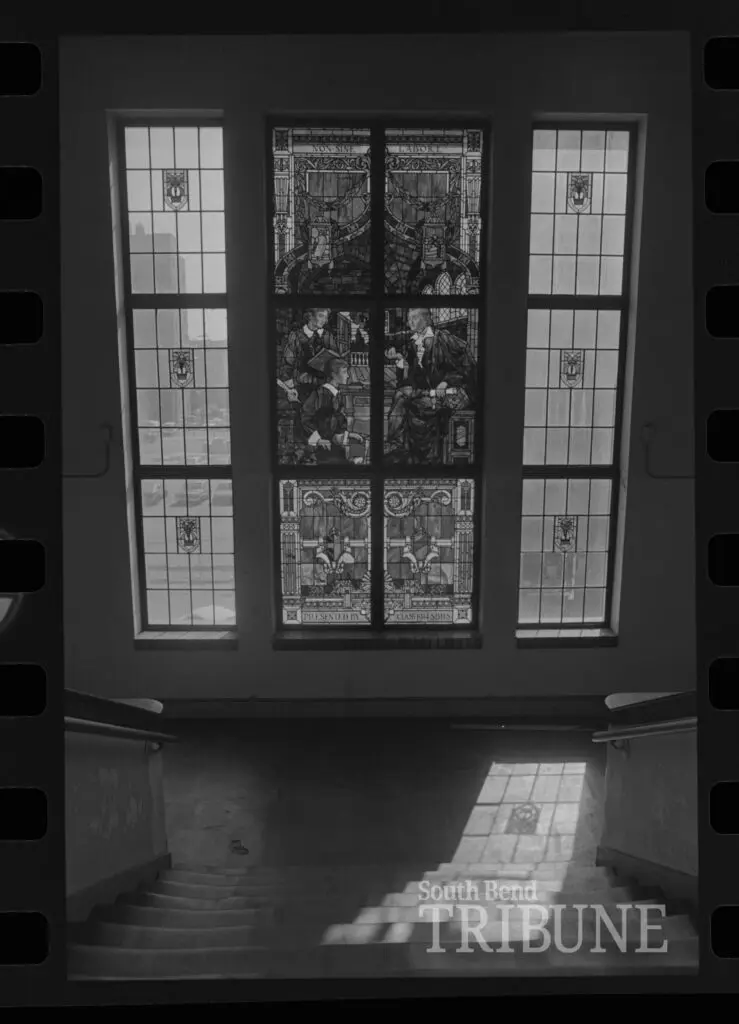
Walking past the grand stained glass window, climbing the worn marble steps, entering into his homeroom, he heard echoes of friends and times gone by. Former Central students like Larry came to pay their respects to the school, and to see a preview of the 106 new apartment units completed that year. Basketball courts, classrooms, and even the pool had been transformed into unique living spaces to give the historic educational building a new purpose.

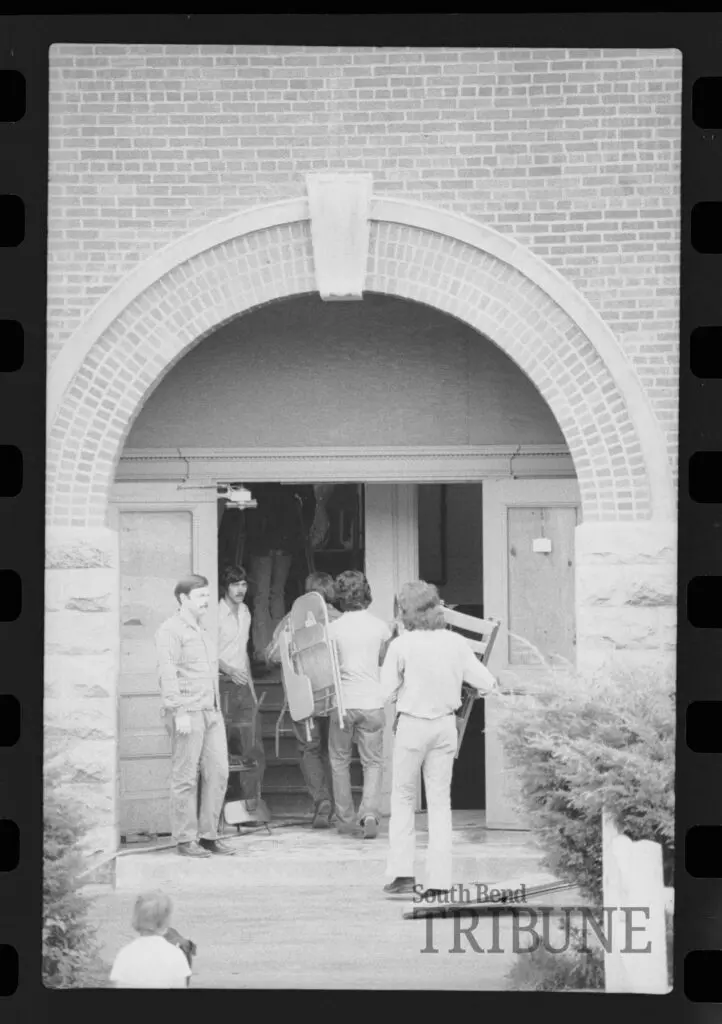
Hosting its first class of students in 1874, Central was rebuilt, remodeled, expanded and repurposed many times before it finally graduated to apartments in 1995. Like many historic buildings in South Bend, evolution becomes necessary to fit with modern needs. The city has an almost hermit crab-like ability to see not just an old shell but new possibilities. The Colfax School, constructed in 1898, is another example of this kind of transformation. After the last school bell rang out in 1976, the building sat empty for only a year before it was turned into the Michiana College of Commerce in 1977, followed by a conversion to the Colfax Cultural Center in the 1980s, which remains in operation today.

Even as time marches on, we can coexist with the memories of the past by listening for the impressions of laughter, learning, and lives being lived in the school halls of history. “Old buildings show you who you are as a community,” said Judy O’Bannon in a 1996 Tribune interview about the Central High project, “They are our meeting and gathering places. Each community needs one.” And in these old school buildings, there are still lessons being learned and lessons being taught…how to play a new board game with friends, how to appreciate local art in a gallery, how to cook a new meal, how to live in a city that is constantly reinventing itself.


More Local & Family History Resources

Schools and libraries of the past used card catalogs to locate books in the collection. Did you know we still have some of the library’s original card catalogs? They no longer point to books in our collection, but to our clipping files. These files are folders of newspaper clippings collected by librarians over decades on a variety of local people, places, events, and buildings. Come to the Local & Family History department on the third floor of the Main Library and a staff member will be happy to pull some clipping files for you to look at, whether it’s for research or just for fun!

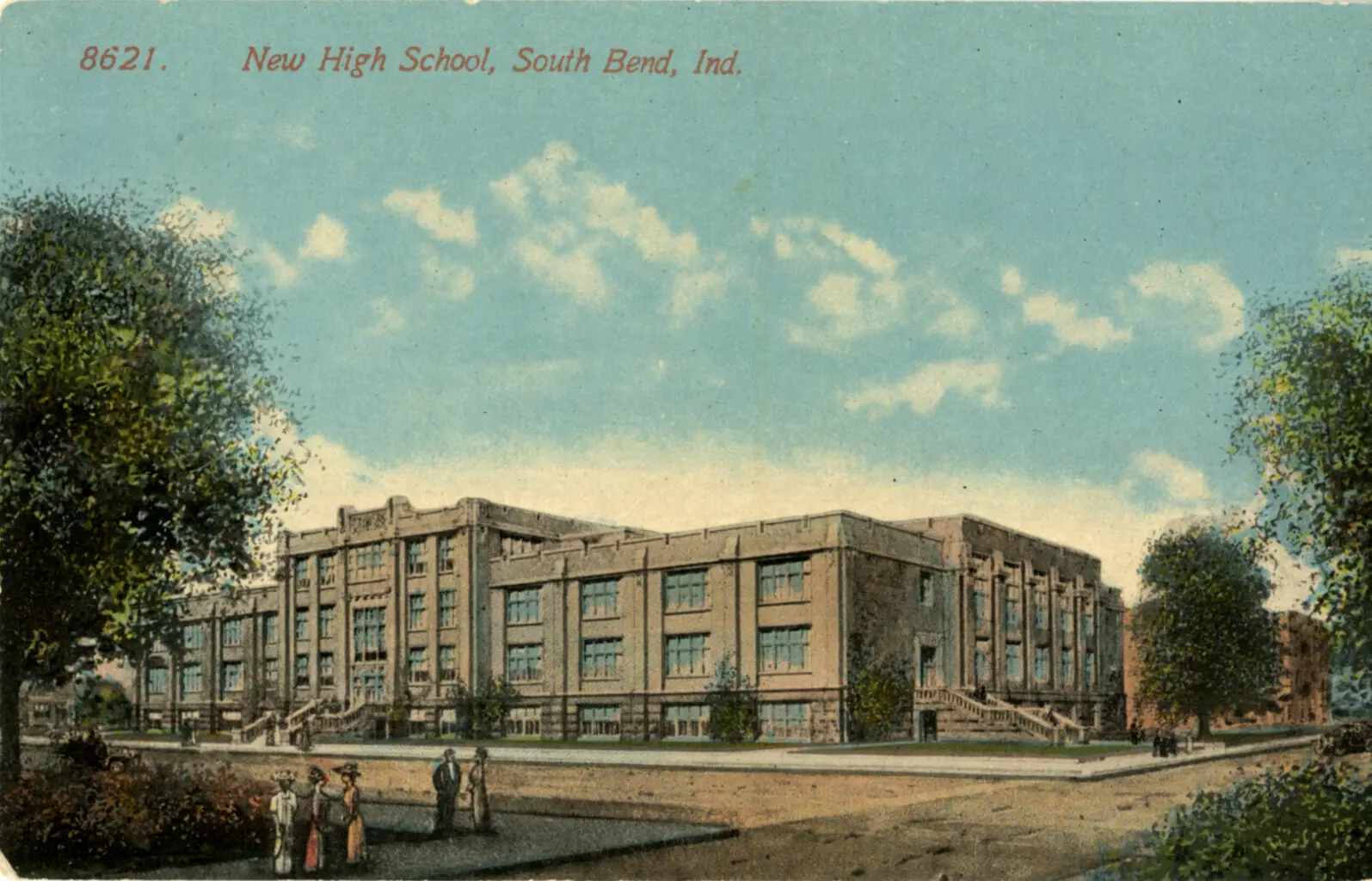
Illustrated vintage postcard showing "New High School" in South Bend, Indiana. The large brick school building features tall windows and prominent staircases on both sides of the entrance. People in early 20th-century clothing are gathered on the sidewalk in front, with trees and blue skies completing the scene.

See Our Full Selection of Historic School Photos

Reading List

South Bend Central High School Remembered

City of South Bend Historic Sites and Structures


References

Borlik, K. (1995, Feb. 1). A class act: Apartment project breathes new life into Central High School, retaining its character and charm. The South Bend Tribune.

Giantomas, L. (1995, May 5). Ceremonies at Central High turn back the hands of time | Michiana point of view. The South Bend Tribune.

Porter, D. (1996, June 7). Central project praised for ingenuity. The South Bend Tribune.

Want to be in the know with the latest library news?