


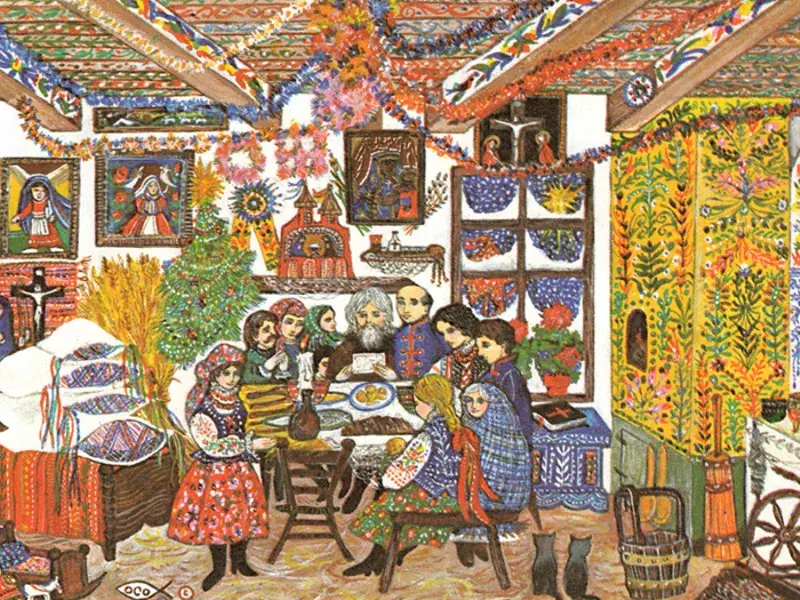
Where Do Our Holiday Traditions Come From?
What do our families pass on to us? Christmas of 2022 was the last time I ever saw my babcia. She passed very unexpectedly a few months after the holidays, and with her passing I also lost the most direct connection to my Polish roots. Growing up I always felt the pride she had at her Polish-ness, but still felt a disconnect between our family and any real old-world traditions. Mine is the sort of American Polish family whose understanding of the language has long since dematerialized, who enjoy Martin’s fried chicken on the same plate as Polish sausage, and who can wish you a Happy Dyngus Day with the best of them. But what my family lacks in heritage traditions my babcia always made up for in tight hugs and big wet kisses on the cheek when we gathered on Christmas morning.
Reconnecting with Polish Traditions
But as I’ve gotten older and sought to reconnect with Polish traditions that my ancestors and great-great grandparents might have practiced before moving to South Bend at the turn of the century, I’ve learned that no matter what the practice is, loved ones are almost always at the heart. This is the case with Wigilia (vee-gee-lee-ah), one of the most important days for people of Polish heritage and descent. Wigilia, which takes place on December 24th, offers the chance to rest, reflect, and ready ourselves for the year ahead. It’s about setting intentions, making amends, repaying debts, returning borrowed items, and completing any unfinished business. Making things right before the year comes to a close.
Elements of Wigilia
There are several elements to Wigilia that encompass the spirit of mindfulness for past, present and future. Breaking and sharing opłatki (oh-pwaht-kee), or Christmas wafers, between family and friends is a time-honored tradition dating back to the 10th century. Before the meal, everyone takes an opłatek and goes around the table to wish each other good health, abundance, and prosperity for the new year, breaking off part of the other person’s wafer to eat.
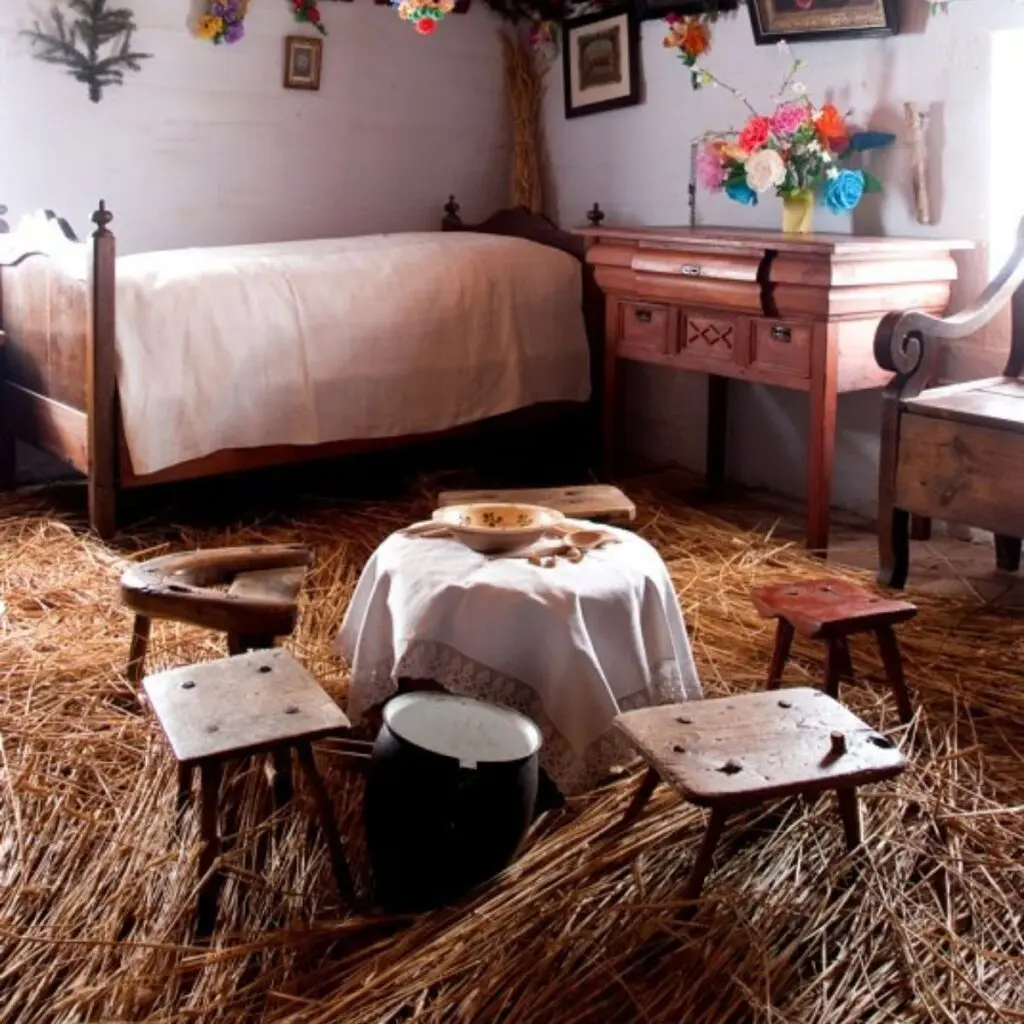

An empty seat is prepared at the table for an unexpected guest or for ancestors to share in the meal and festivities. Sheafs of wheat are placed in the corners of the room to represent loved ones who have passed on, and straw placed under the tablecloth to act as a magical barrier that wards off negative energies.
I’ve brought elements of some of these practices into my life over the past few years since losing my babcia, like wearing a wheat brooch on Christmas Eve to honor her memory and trying my hand at crafting Polish holiday decorations. I’ve also upheld some traditions I learned directly from her, like helping myself to an extra kifli or two on Christmas Day. But more than anything, I hope that what is passed on long after I’m gone are traditions filled with love, tight hugs, and big wet kisses on the cheek.
References
Capuzzo, T.B. (2024, Dec. 1). A Polish Christmas vigil. Mountain Home Magazine. https://www.mountainhomemag.com/2024/12/01/514385/a-polish-christmas-vigil
Knab, S.H. (1998). Polish customs, traditions & folklore. Hippocrene Books, N.Y.
Krysa, C.M. (1998). A Polish Christmas Eve: Traditions and recipes, decorations and song. CWB Press, N.Y.
Straw as a ‘magickal barrier’, and other Christmas decorations from Polish folklore. Lamus Dworski. https://lamusdworski.wordpress.com/2016/12/23/decorations/
Wigilia: Christmas Eve in Poland. Lamus Dworski. https://lamusdworski.wordpress.com/2015/12/06/wigilia/


