


The Powell Family: Making South Bend Home
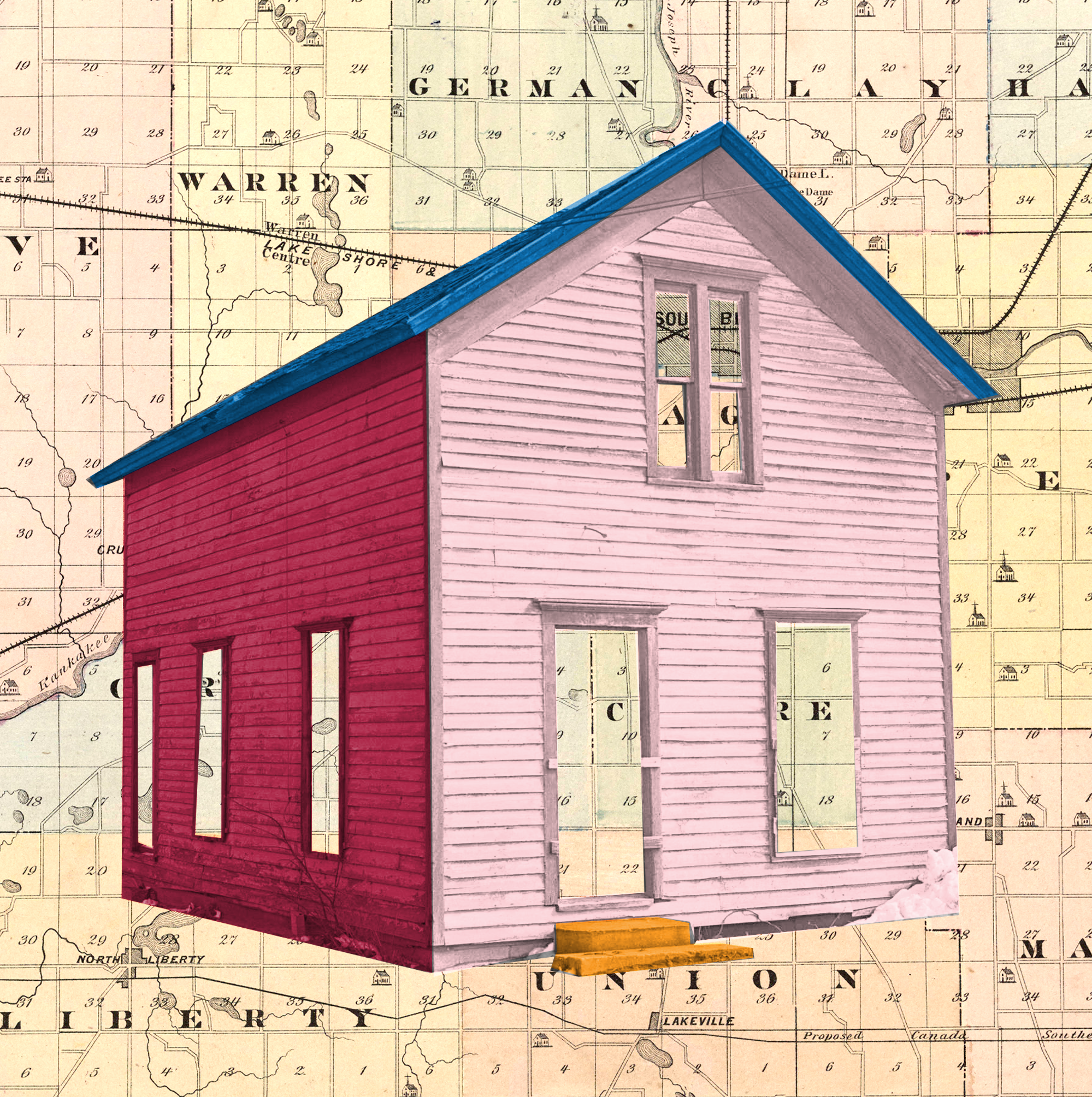
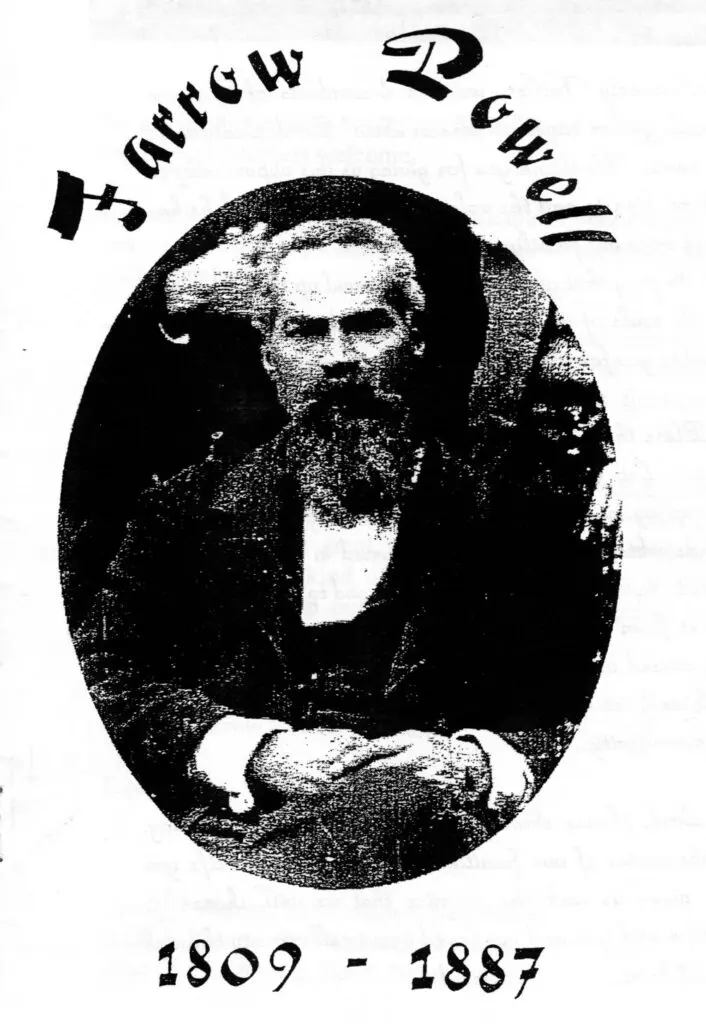
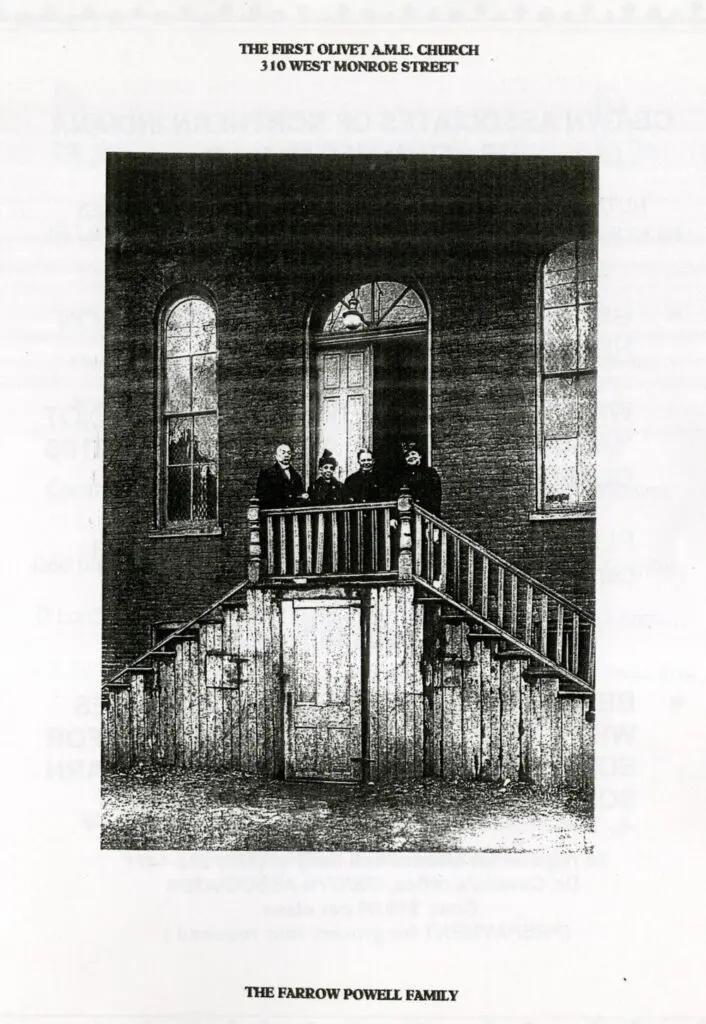
Farrow and Rebecca gathered up their belongings, their children, and their hope for the future, setting out northward for South Bend, Indiana. First from North Carolina then to Southern Indiana, they continued on to forge a path of greater opportunity for their family. The year was 1858, and the Powell family became one of the first Black families to settle in South Bend. The Powells were a hugely influential family to the area. They were active in the community, buying multiple properties and using their resources to help establish anchor sites like the Olivet A.M.E. church in 1870. Their home was located on the 400 block of Main Street, one home among a handful of Black homesteads in the burgeoning South Bend. In an oral history interview, Powell family descendant John Charles Bryant described growing up on Main Street: “Main Street was a very rich heritage. All the families were supportive of one another. Nobody went hungry…if somebody needed something, the brothers came together.”
A Changing Community Landscape
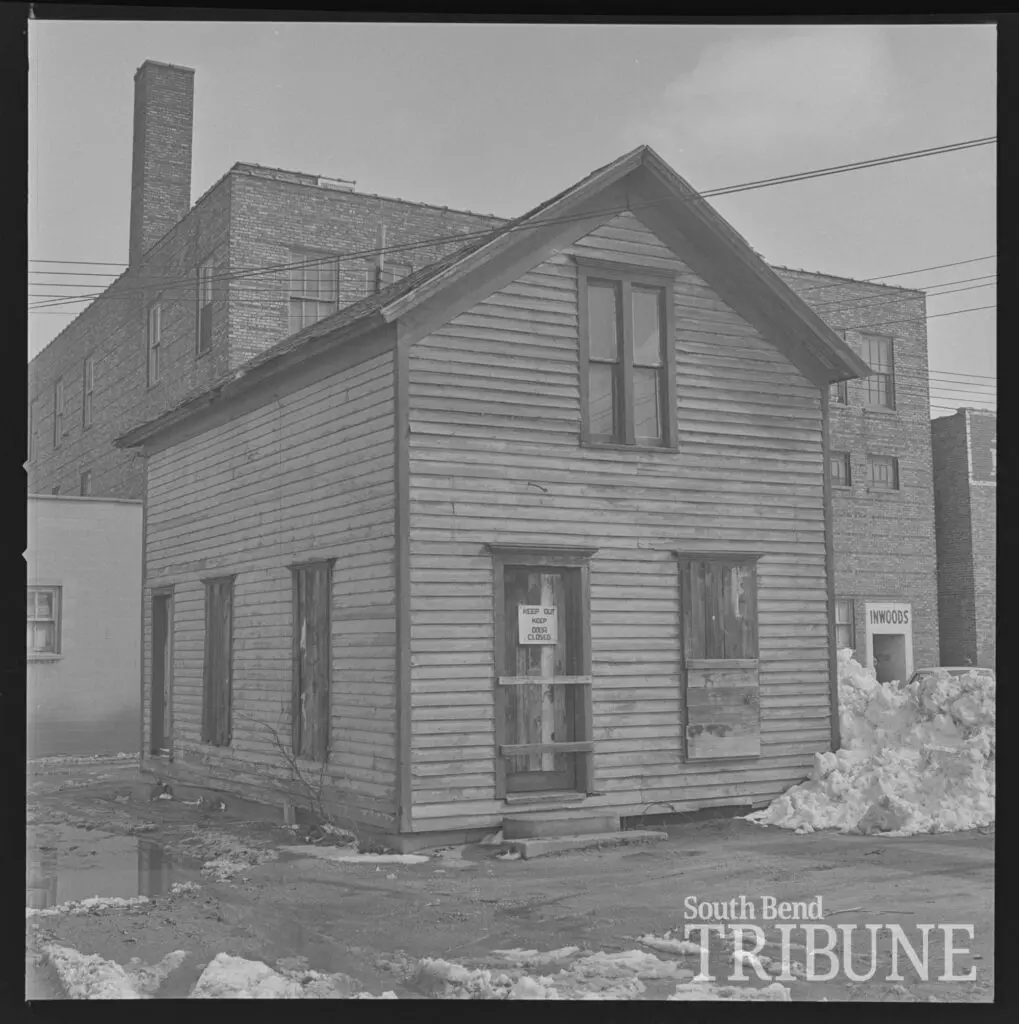
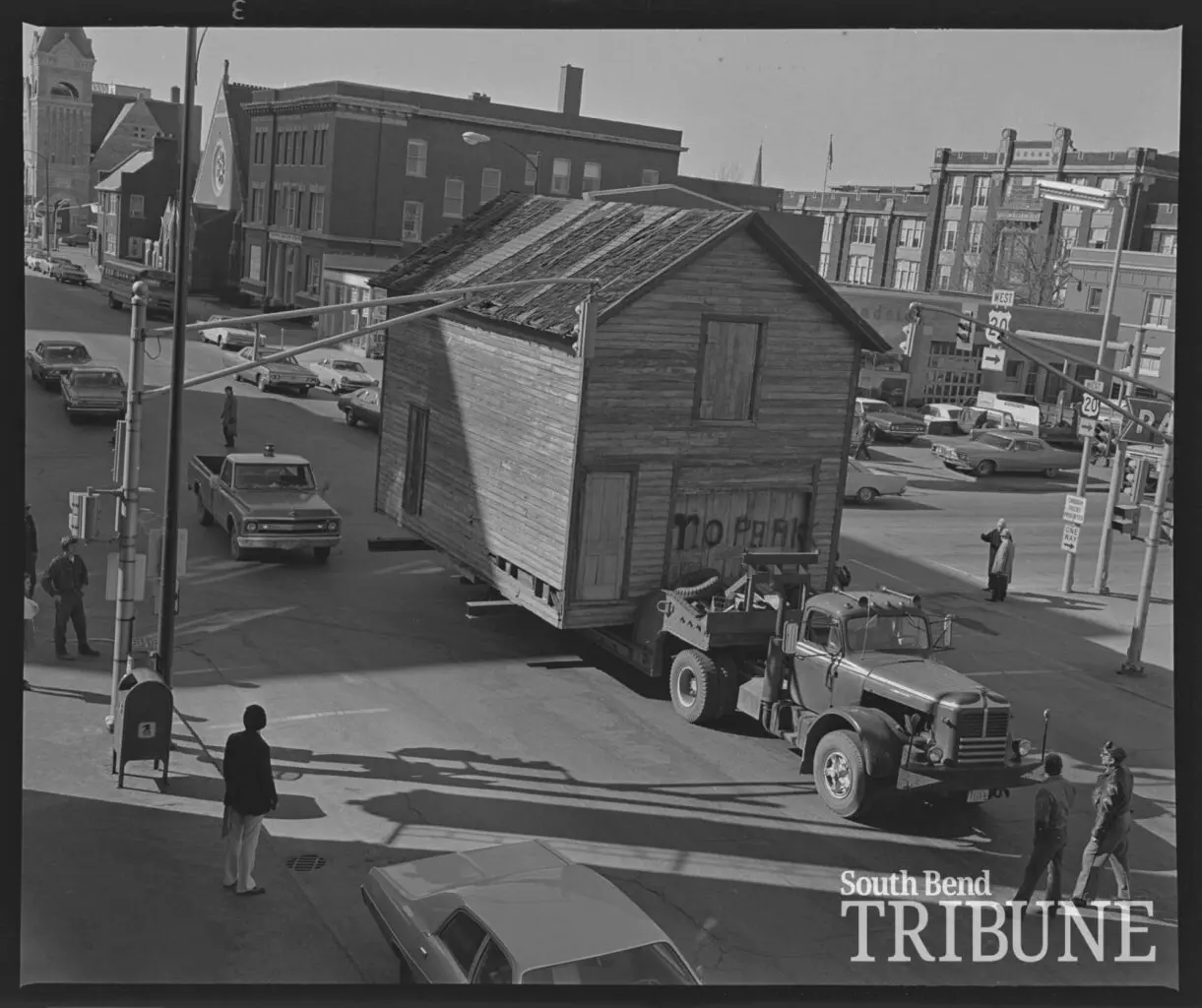
Eventually, the neighborhood began to change and Main Street neighbors relocated. “Our house was the last standing house,” Bryant remarked, “all the other relatives had sold their houses.” The Powell family home later sat vacant in the Innwoods parking lot, a lone structural island in a sea of urban development and asphalt that had sprung up around it. Boarded up windows relegated this prominent South Bend structure to slow disappearance, until 1973 when local high school students took up the cause to preserve it. The home was lifted up on the bed of a trailer and relocated to Leeper Park following the students’ activism, making its way through the city streets as a one-house parade.
Carried Forward in Memory and Community
Devastatingly, the Powell home was vandalized repeatedly after its relocation, and was ultimately destroyed by an arsonist’s flames in 1980. But what the home stood for, the intrepid spirit of Black hope and community togetherness, remains. The history that John Charles Bryant shared about his family legacy and the Main Street neighborhood lives on to inspire us to connect with our neighbors, build strong bonds with each other, and work together to construct our hope for the future one story at a time.
Black History Month Resources
This month, the South Bend Tribune is publishing weekly profiles on community members and Black-owned businesses. Access the Tribune for free with your library card!
Explore the library’s Civil Rights and African American Heritage collection on Michiana Memory.
The Civil Rights Heritage Center is hosting events all month long to honor and celebrate Black history in South Bend. Check out their events page here!
References
Black History Month: Powell family moves to South Bend — 1858. (2023, Feb. 2). South Bend Tribune. https://www.southbendtribune.com/story/news/local/2023/02/02/south-bend-black-history-facts/69849650007/
Bryant, J.C. (2001, May 8). Interview by Healey, D. Recording the civil rights movement in South Bend. Civil Rights Heritage Center. Indiana University South Bend. https://michianamemory.sjcpl.org/digital/collection/p16827coll13/id/334/rec/7
Civil Rights Heritage Center. (n.d.). 15. Olivet A.M.E. Church. African American Landmark Tour. https://aalt.iusb.edu/map/olivet-african-methodist.html
Garner, G. & Watson, J. (Producers). (2021). South Bend’s own words [Audio podcast]. Civil Rights Heritage Center. https://podcasts.apple.com/us/podcast/john-charles-bryant-african-american-life-and-legacy/id1207874365?i=1000682390124
The History museum. (n.d.). Local African American history. https://www.historymuseumsb.org/local-african-american-history/
Mishawaka-Penn-Harris Public Library. (2022, Dec. 2). MPHPL Powell family tribute [Video]. YouTube. https://www.youtube.com/watch?v=zdlGAXQe3mM
Randy, R. (2019, June 30). A look back: Farrow Powell family among first blacks to settle in South Bend. The South Bend Tribune. https://www.southbendtribune.com/story/news/local/2019/06/30/a-look-back-farrow-powell-family-among-first-blacks-to-settle-in-south-bend/45930913/
Robinson, Rev. C.G. & Perry, Rev. L.J. (1974). Olivet African Methodist Episcopal Church: 1870 – 1974. Pictorial Church Directories of America, Inc.


